Domain Warming: The Complete Guide to Scaling Cold Email Without Burning Your Reputation
A brand-new domain sending 500 cold emails on day one looks exactly like spammer behavior to Gmail, Outlook, and every other inbox provider, even if your intentions are completely legitimate. Domain warming is how you avoid that, and it’s the step most teams either skip entirely or rush through too fast.
Here’s what it actually is, why it matters, and how to do it properly.
What domain warming actually means
Every domain and IP address builds a reputation score over time, invisible to you but tracked continuously by inbox providers. That score is built from real signals: how consistently you send, how recipients engage with your emails, how many bounce, how many get marked as spam.
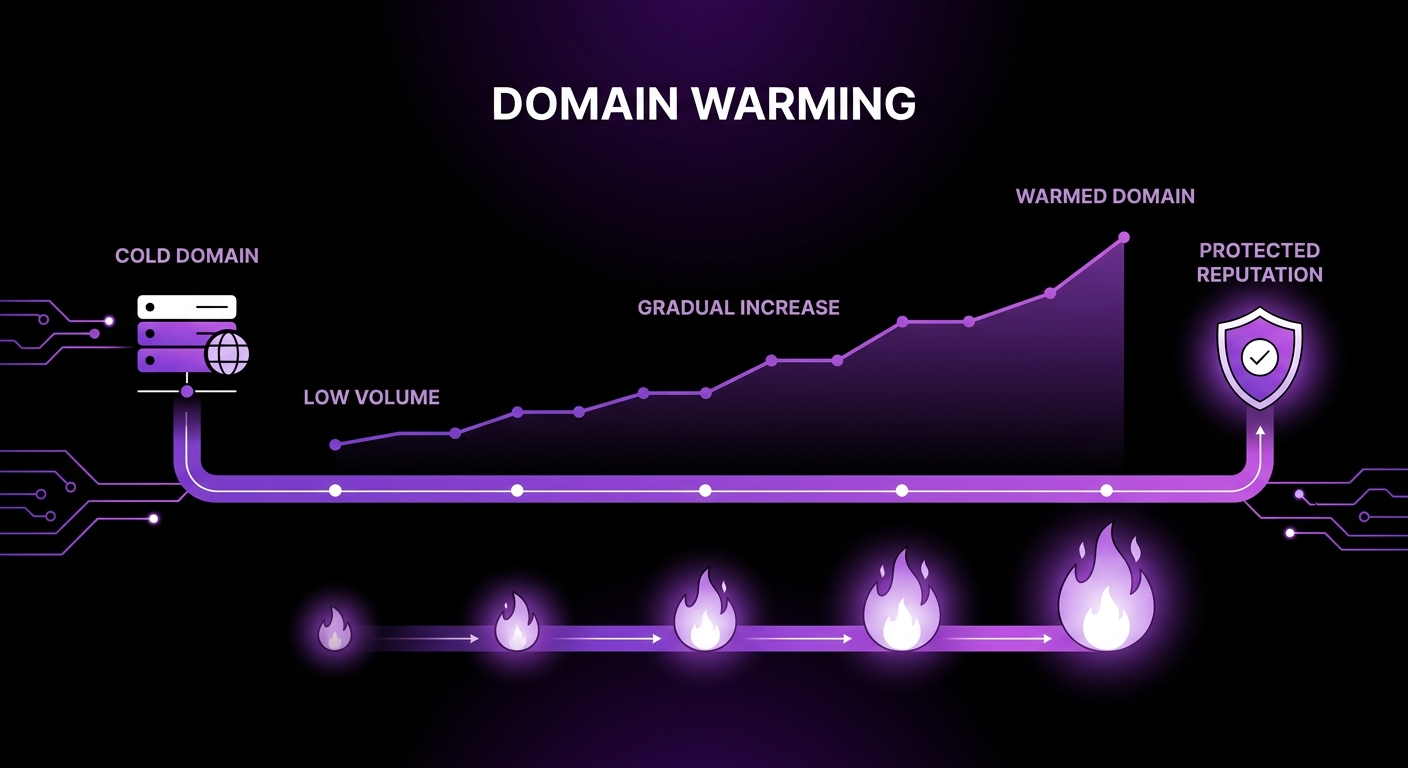
A new domain has no history at all. No history looks suspicious by default, because legitimate senders build up a track record gradually while spammers often burn through domains fast, sending high volume immediately then abandoning them. Domain warming is the process of building that positive history deliberately, before you ever run a real campaign at volume.
Why skipping it backfires
Teams that skip warming and jump straight to full-volume sending typically see:
- A spike in spam folder placement within the first few days
- Rising bounce rates as providers start silently filtering sends
- A damaged reputation that takes weeks to recover, even after fixing the underlying issue
The frustrating part is that this damage happens fast and recovers slowly. A domain that gets flagged in its first week can stay suppressed for a month or more, long after the actual mistake is corrected.
The warming timeline
There’s no universal formula, warming speed depends on your target volume and how established the domain already is, but a typical schedule for a new domain looks like this:
Week 1: 10 to 20 emails per day Send only to your most engaged contacts, ideally people who know to expect the email and will open, read, and reply. This is about generating positive engagement signals, not volume.
Week 2: 20 to 40 emails per day Begin introducing slightly less warm contacts, while keeping engagement rates high. Watch for any increase in bounces or spam complaints before increasing further.
Week 3: 40 to 80 emails per day Volume increases, but the mix of contacts should still lean toward higher engagement likelihood. This is where most of the domain’s reputation gets established.
Week 4 and beyond: scale toward target volume Gradually increase toward your actual campaign volume, adding 20 to 30 percent more per week rather than jumping straight to full scale.
If your target volume is high, 500 or more emails per day, extend this timeline. Warming too fast defeats the purpose.
What to actually do during warming
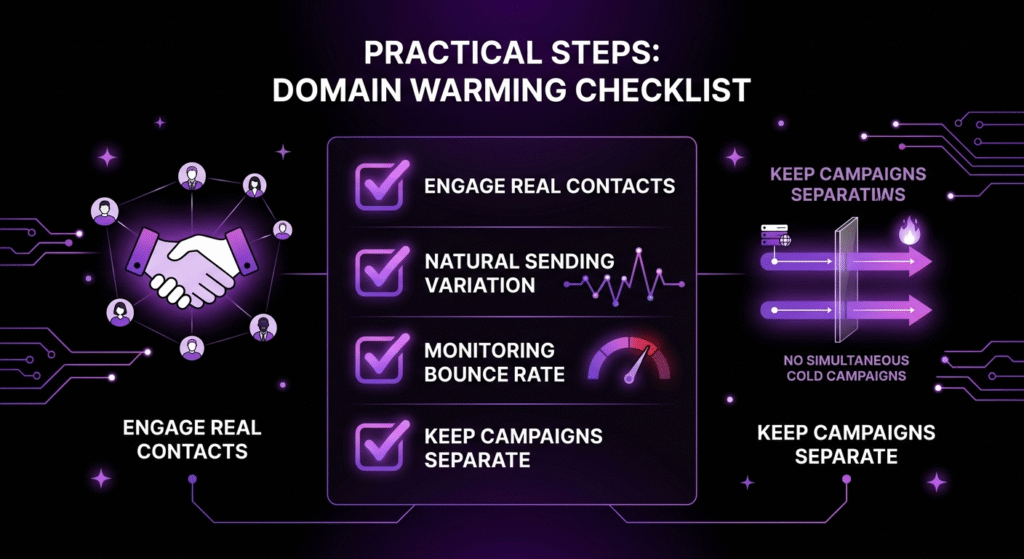
Send to real, engaged inboxes first. Colleagues, past clients, or a small list of contacts who’ve agreed to open and reply. Genuine engagement early on is the strongest signal you can send.
Vary your sending pattern. Sending the exact same volume at the exact same time every day looks automated in a way that can itself be a minor negative signal. Natural variation looks more human.
Monitor bounce and complaint rates daily. A bounce rate creeping above 2 to 3 percent, or any spam complaints at all, is a signal to pause and investigate before continuing to scale.
Don’t run cold campaigns and warming simultaneously on the same domain. Warming only works if the domain’s early sending pattern is genuinely different from a cold blast. Mixing the two undermines the process.
Warming tools vs manual warming
Automated warming tools exist that simulate engagement by sending and replying to emails between seed accounts. These can help establish baseline sending patterns, but they’re not a substitute for genuine engagement from real recipients. The strongest warming combines a warming tool for consistent baseline activity with real sends to genuinely engaged contacts.
How long until you can run a full campaign
Most domains are ready for moderate campaign volume, a few hundred emails a day, after 3 to 4 weeks of proper warming. Domains targeting very high volume, over a thousand a day, often need 6 to 8 weeks to build a reputation that can sustain it without triggering filters.
The takeaway
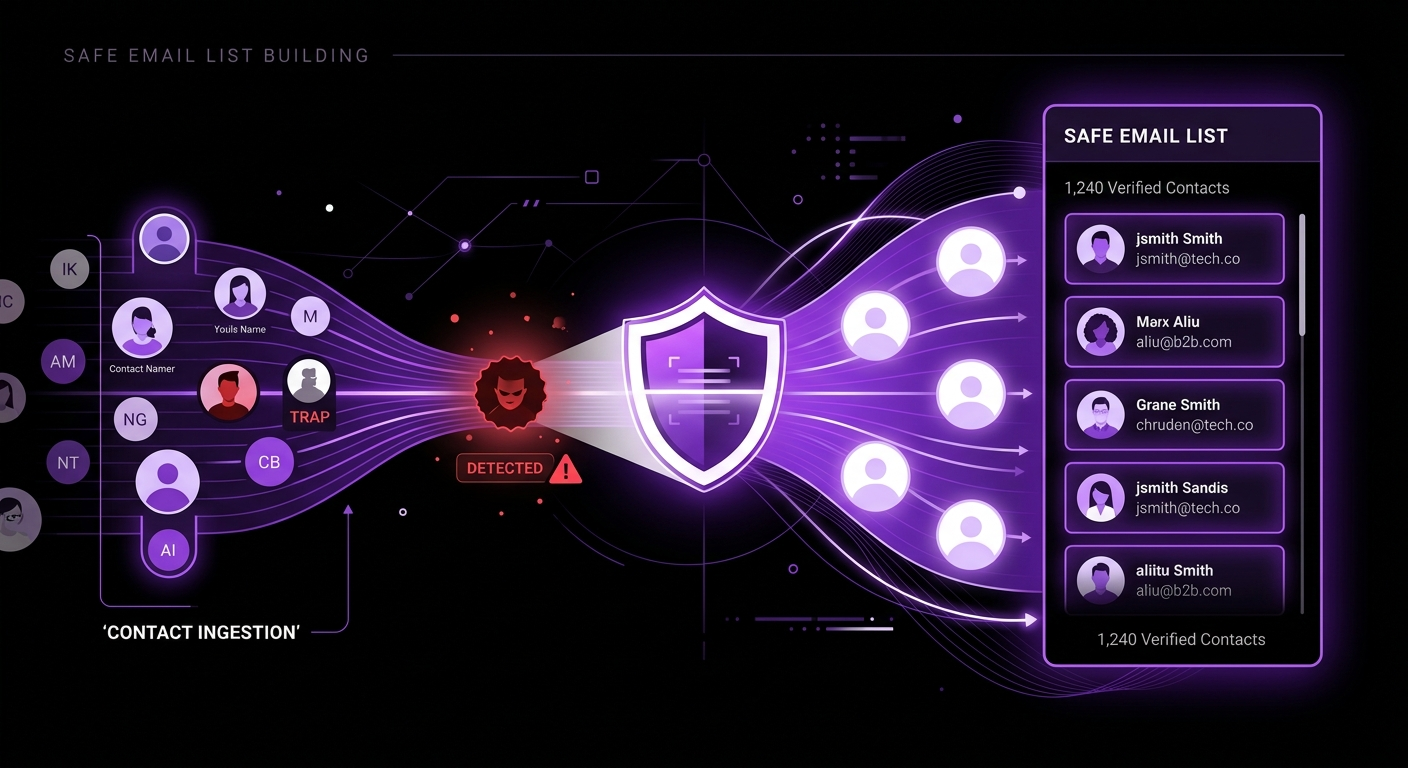
Domain warming isn’t a formality, it’s the difference between a domain that reaches the inbox reliably for months and one that gets flagged in its first week and never fully recovers. If you’re setting up a new sending domain, build the warming period into your campaign timeline from the start, not as an afterthought once deliverability problems already show up. Pair a sound warming plan with list practices that avoid spam traps to protect sender reputation.
Grow X handles domain warming as part of every deliverability engagement, alongside authentication setup, copywriting, and campaign management for B2B SaaS companies. If you’re planning to scale outreach on a new domain, book a free consultation before you start sending.