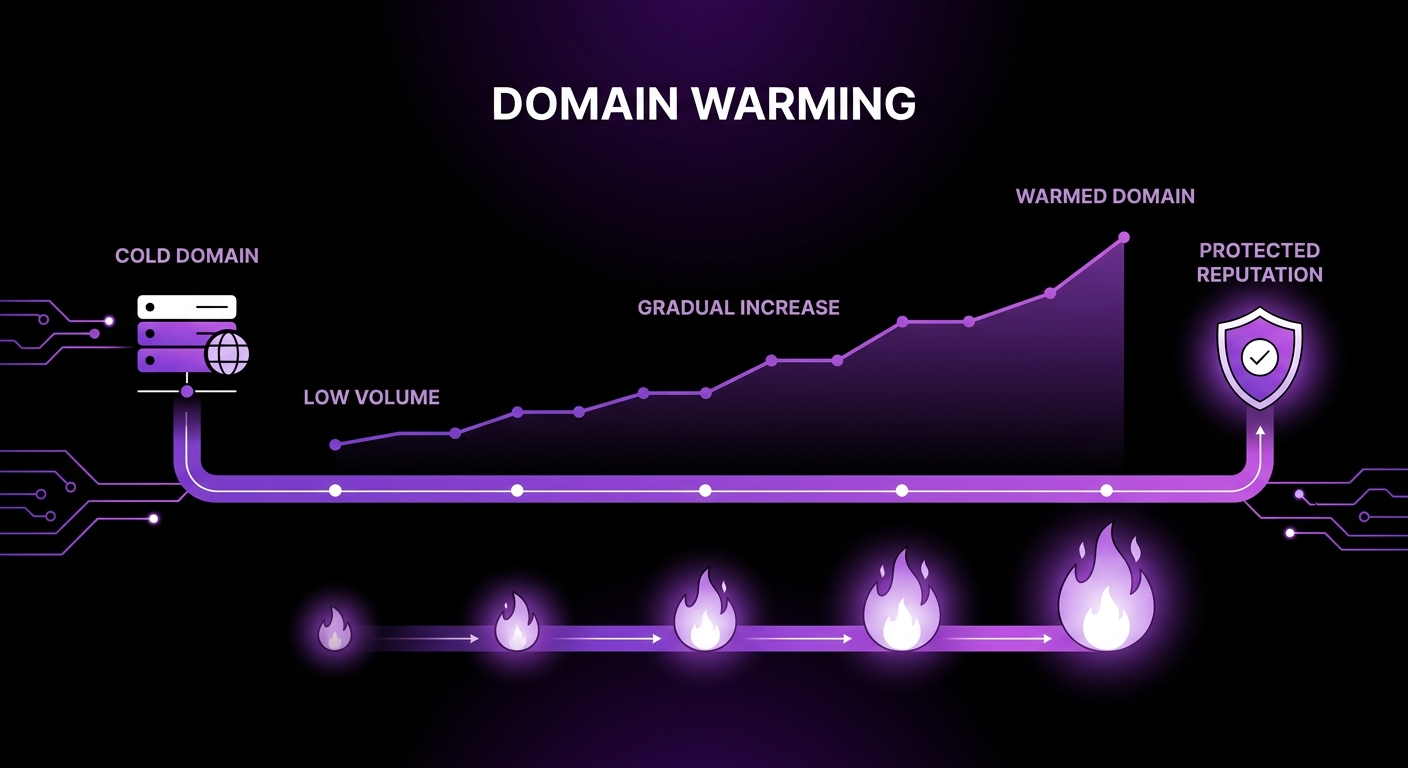

One spam trap hit can undo weeks of careful domain warming. A single bad address on your list, sent to at the wrong time, can flag your domain’s reputation for a month, even if every other email you sent that day was perfectly legitimate. Most teams don’t find out they hit one until deliverability craters and they’re left guessing why.
Here’s what spam traps actually are, and how to build a list that avoids them from the start.
What a spam trap actually is
A spam trap is an email address that isn’t tied to a real person, planted specifically to catch senders with poor list practices. Inbox providers and anti-spam organizations use them to identify who’s sending to invalid, purchased, or poorly maintained lists. There are three main types.
Pristine traps are addresses that were never used for anything and never opted in to receive email. They exist purely to catch senders scraping or purchasing data, since there’s no legitimate way to have obtained that address through real consent.
Recycled traps are old, genuinely abandoned email addresses that inbox providers repurpose as traps after a period of inactivity, often six months to a year of no engagement. This is why sending to a stale, unmaintained list is risky even if every address on it was legitimate at some point.
Typo traps are addresses similar to real, common domains but slightly misspelled, catching senders whose list-building process doesn’t validate formatting carefully.
Hitting any of these signals to providers that your data sourcing or list hygiene practices are weak, and reputation damage follows.
Where spam traps actually come from
Purchased or scraped lists are the highest-risk source by far. Bought lists routinely contain pristine traps because the data was never collected through genuine opt-in, and there’s no way to verify quality before you’re already sending to it.
Old, unmaintained lists accumulate recycled traps over time as addresses on the list go dormant and get repurposed. A list built two years ago that hasn’t been re-verified since is a meaningfully different risk than one built last month.
Manually typed or poorly validated entries introduce typo traps when there’s no format checking in the data collection process.
How to build a list that avoids them
Source from verified platforms, not purchased data
Tools like Apollo.io and LinkedIn Sales Navigator pull from actively maintained, opt-in-based data sources. This doesn’t guarantee zero risk, but it’s a fundamentally different risk profile than a purchased list with unknown provenance.
Verify every address before it touches a campaign
Email verification tools check deliverability status and flag invalid, risky, or role-based addresses before you ever send to them. This step alone catches the majority of typo traps and many pristine traps, since verification services maintain databases of known trap addresses.
Never reactivate a list without re-verification
If you’re returning to a list that’s been sitting for six months or more, treat it as high-risk until re-verified. Recycled traps accumulate specifically during periods of inactivity, so a list that was clean a year ago isn’t necessarily clean now.
Watch engagement, not just validity
An address can pass verification and still be a low-engagement risk if it never opens, clicks, or replies. Segment out consistently unengaged addresses after a defined period, since continuing to send to them long-term increases the odds of hitting a trap that’s masquerading as a normal inactive contact.
Avoid list-building shortcuts that promise huge volume fast
Any source offering a massive list very quickly and very cheaply is a red flag. Real, verified B2B data at scale takes time and research to compile properly. Shortcuts here are almost always where trap-laden data comes from.
What to do if you think you’ve hit one
Stop sending to that segment immediately, and audit recent list additions for anything sourced outside your standard verification process. Run a fresh verification pass on the full active list, and reduce sending volume temporarily while monitoring bounce and complaint rates for signs the reputation issue is stabilizing.
The takeaway
Spam traps aren’t bad luck, they’re a direct consequence of how a list was built. Verified sourcing, regular re-verification, and treating stale lists as high-risk until proven otherwise will keep you out of the traps that quietly wreck otherwise well-executed campaigns.
Grow X builds and verifies lead lists as part of a full-service email marketing engagement, alongside deliverability, copywriting, and campaign management for B2B SaaS companies. If you’re not sure how clean your current list actually is, book a free consultation.