
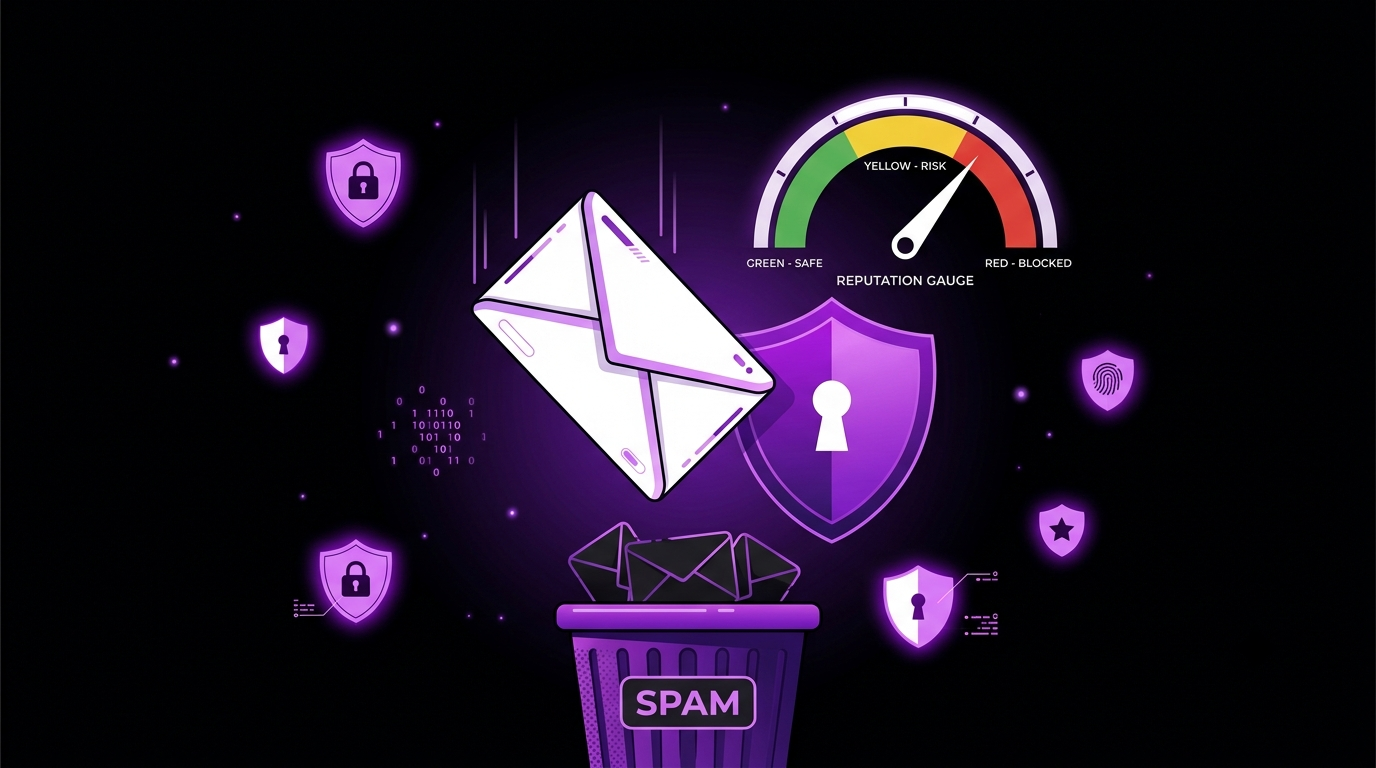
ou wrote a solid subject line. Your copy is tight. Your offer is real. And still, half your prospects never see the email because it never made it past the spam folder.
This happens to founders and sales teams constantly, and almost none of them know why. They assume it’s a copy problem. It’s not. Most of the time, it’s a technical problem that has nothing to do with what you wrote and everything to do with how your domain and infrastructure are set up.
Here’s what’s actually going on, and what to do about it.
Inbox placement is decided before anyone reads your email
Gmail, Outlook, and every major inbox provider run your email through a series of checks the moment it lands on their servers. These checks happen in milliseconds, before a human ever sees the subject line. If your email fails enough of them, it gets filed straight into spam or promotions, no matter how good the copy is.
The three checks that matter most are SPF, DKIM, and DMARC.
SPF (Sender Policy Framework) tells receiving servers which mail servers are allowed to send email on behalf of your domain. If your SPF record is missing or misconfigured, providers can’t verify you’re actually who you say you are.
DKIM (DomainKeys Identified Mail) attaches a digital signature to your email that proves the message wasn’t altered in transit. No signature, or a broken one, and the email looks suspicious by default.
DMARC (Domain-based Message Authentication) tells inbox providers what to do if SPF or DKIM checks fail, and reports back to you when someone is spoofing your domain. Without it, you have no visibility into abuse, and providers trust your domain less.
If any one of these is missing, you’re not just risking the spam folder. You’re actively signaling to Gmail and Outlook that your domain hasn’t done the basic work to prove it’s legitimate.
Your sending reputation matters more than your copy
Every domain and IP address has a reputation score, invisible to you, tracked by every major inbox provider. It’s built from things like:
- How many recipients mark your email as spam
- How many emails bounce because the address doesn’t exist
- Whether your sending volume spikes suddenly
- Whether you’re sending from a brand-new domain with no history
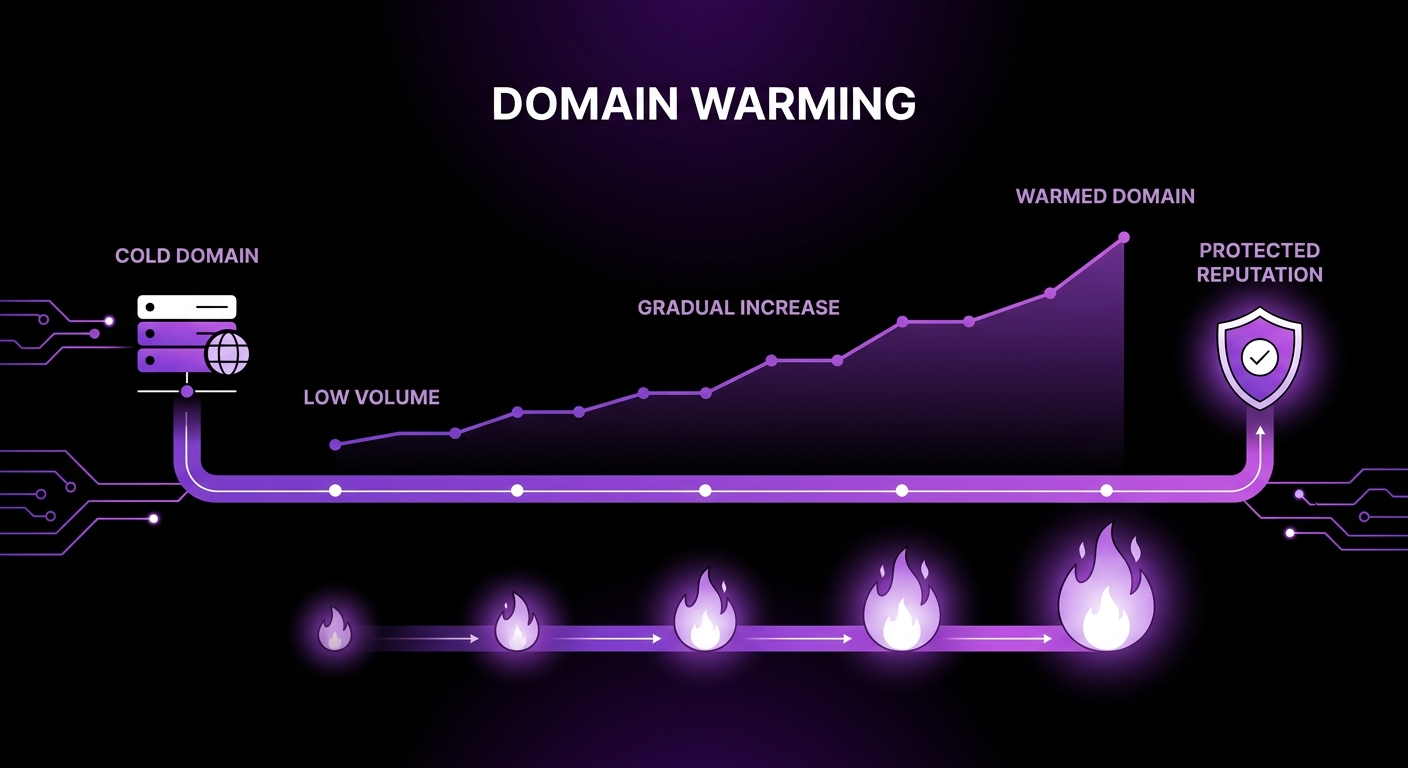
A brand-new domain sending 500 cold emails on day one looks exactly like spammer behavior to Gmail, even if your intentions are good. This is why domain and IP warming exists. You start with small volumes to a highly engaged list, build a positive sending history over two to four weeks, and gradually scale up. Skip this step and you’ll burn your domain’s reputation before your campaign even gets going.
List quality quietly wrecks deliverability
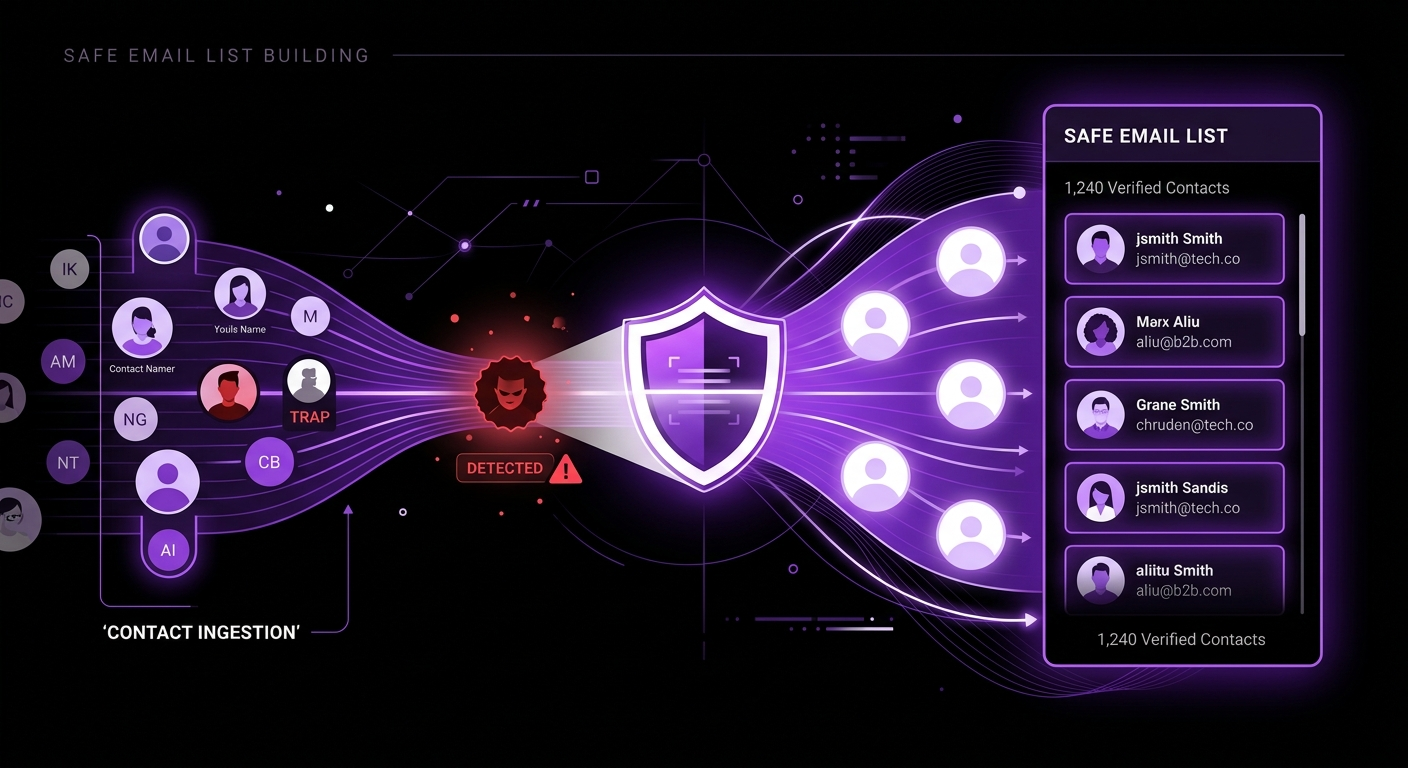
Every bounced email, every spam complaint, and every message sent to a dead inbox chips away at your sender reputation. A list built from scraped or unverified data will always underperform, even with perfect technical setup, because the bounce rate alone tells inbox providers something is wrong with how you’re sourcing contacts.
Spam traps make this worse. These are email addresses planted specifically to catch senders with bad list hygiene. Hit one, and it can damage your domain reputation for weeks.
The fix isn’t complicated, but it has to be done in order
- Set up and verify SPF, DKIM, and DMARC on every sending domain. This is non-negotiable and takes a few hours to configure correctly.
- Warm up new domains and IPs gradually before running real campaigns at volume.
- Monitor your sender reputation on an ongoing basis, not just once at setup.
- Keep your list clean with regular verification and by removing bounces and unengaged contacts immediately.
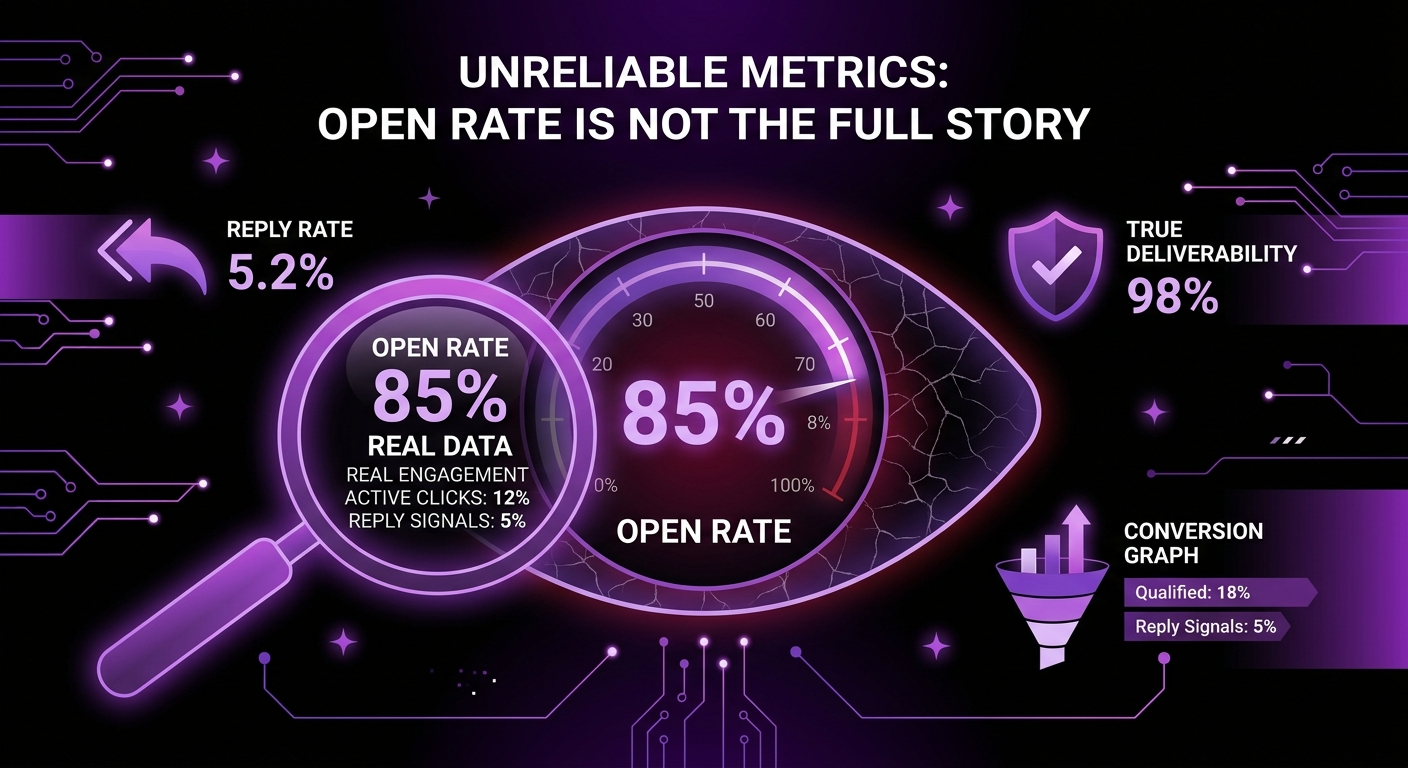
- Watch engagement signals, not just replies. Opens, clicks, and how long people keep your emails in their inbox all feed back into your reputation.
None of these are one-time tasks. Deliverability is a system you maintain, not a box you check once and forget.
The takeaway
If your open rates are low and your emails are landing in spam, the first place to look isn’t your subject lines. It’s your domain authentication, your sending reputation, and your list quality. Fix the foundation first. Everything else, including your copy, only works once your emails are actually reaching the inbox.
Grow X handles full-stack email deliverability alongside copywriting, automation, and campaign management for B2B SaaS companies. If you’re not sure whether your domain is set up correctly, book a free deliverability audit.
1 Comment
Hi I want the audit